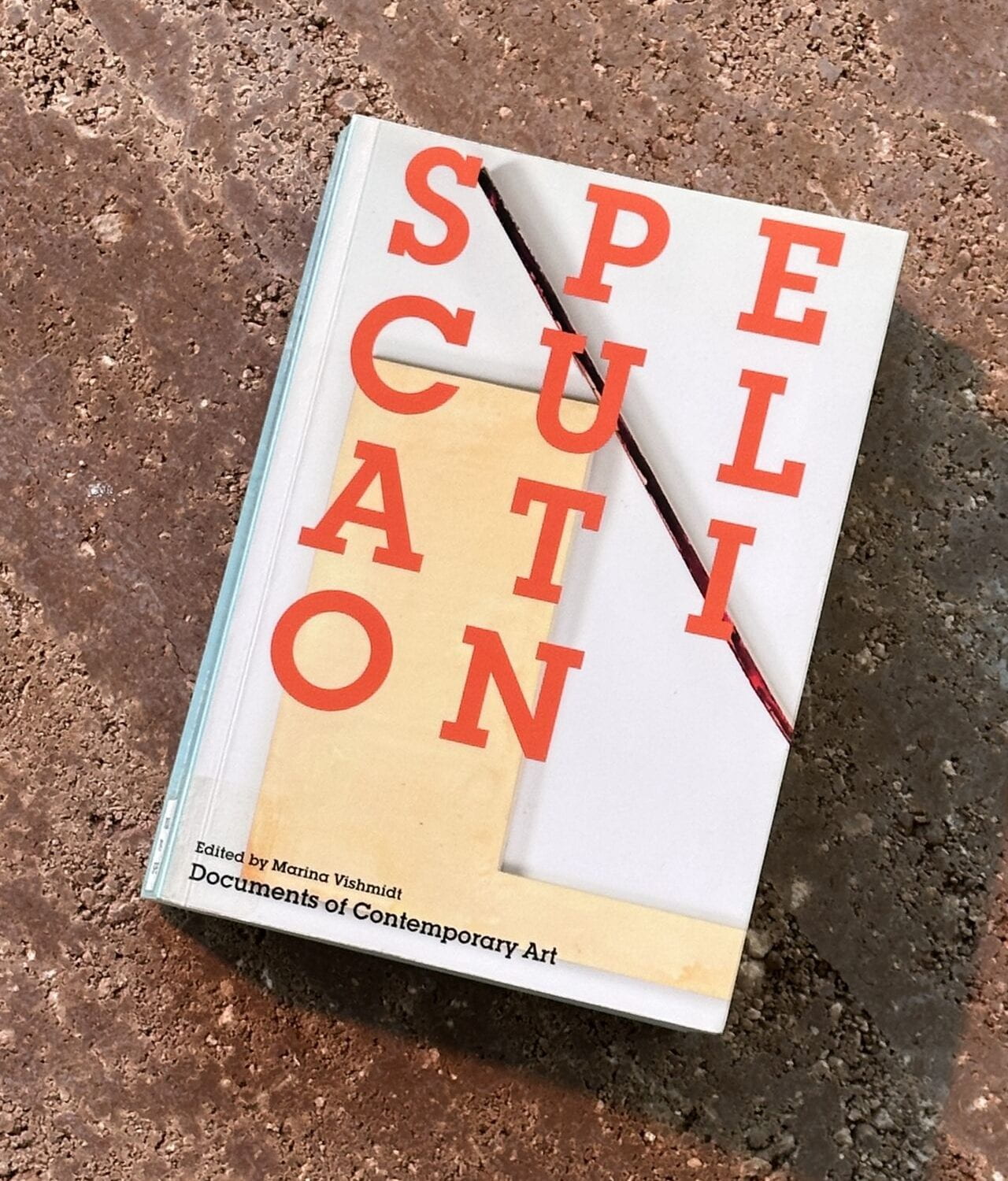
In Documents of Contemporary Art: Speculation (2023), published by Whitechapel Gallery and The MIT Press and edited by Marina Vishmidt, the term speculation emerges as a critical concept for navigating the contemporary moment. As someone with an interdisciplinary approach and a deep interest in exploring the nature of Time, I find this concept both illuminating and essential in understanding the way we interact with the past, present, and future.
Speculation is not merely an exercise in projecting future possibilities; it is a dynamic engagement with Time itself. As Lisa Adkins writes in Speculative Time and the Debt Society, “Speculative time is a time in which pasts, presents, and futures stand not in a pre-determined or pre-set relation to each other, but are in a continuous state of movement, transformation, and unfolding.” Here, Time is fluid, non-linear, and interconnected.
This notion of speculative time urges us to move beyond binary thinking and embrace a more integrated approach. Instead of isolating the past, present, and future, we should consider them as part of a unified flow—where the art theories of the past, the pressing social issues of today, and the emerging technologies of the future coalesce into a larger, ever-evolving conversation. This is not simply art for art’s sake or art as a trend but rather a form of art as an exploration of time, existence, and human potential.
In this context, art becomes more profound and, simultaneously, more exploratory. It must transcend disciplinary boundaries, challenging conventional notions and fostering collaboration to expand individual and collective potential. Through this expansion, we move closer to realizing art that is not confined to an exclusive few but is accessible and meaningful to all. Art, in this speculative sense, becomes an inclusive, participatory space that invites diverse voices and perspectives.
Speculation is not just a framework for art—it is a way of being. It is a call to think beyond the present, to expand our creative boundaries, and to engage with time in all its complexities. In doing so, we not only open new possibilities for art but also create a space where art becomes a collective, transformative experience.